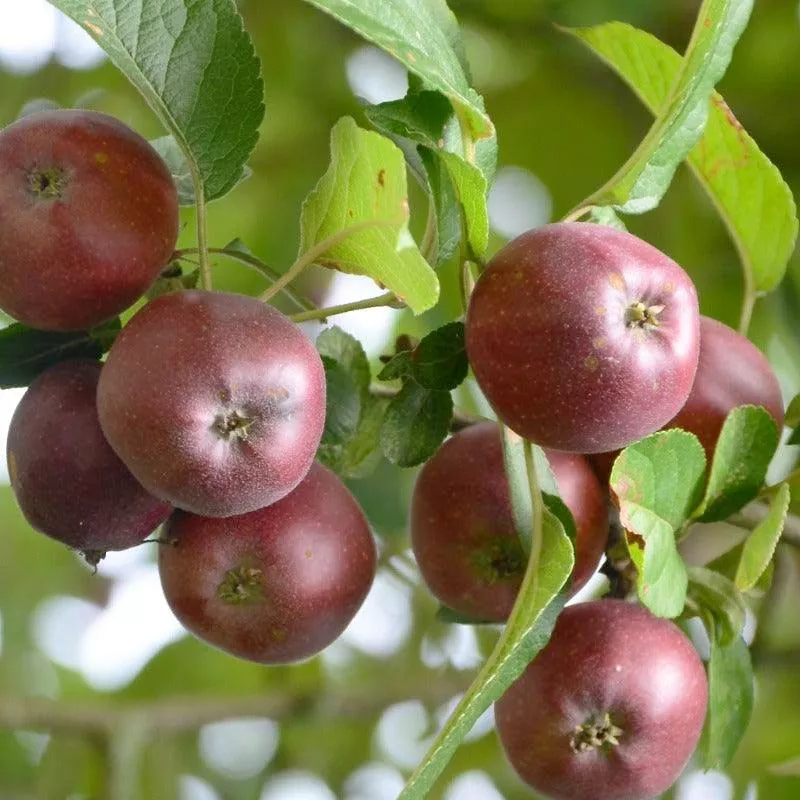
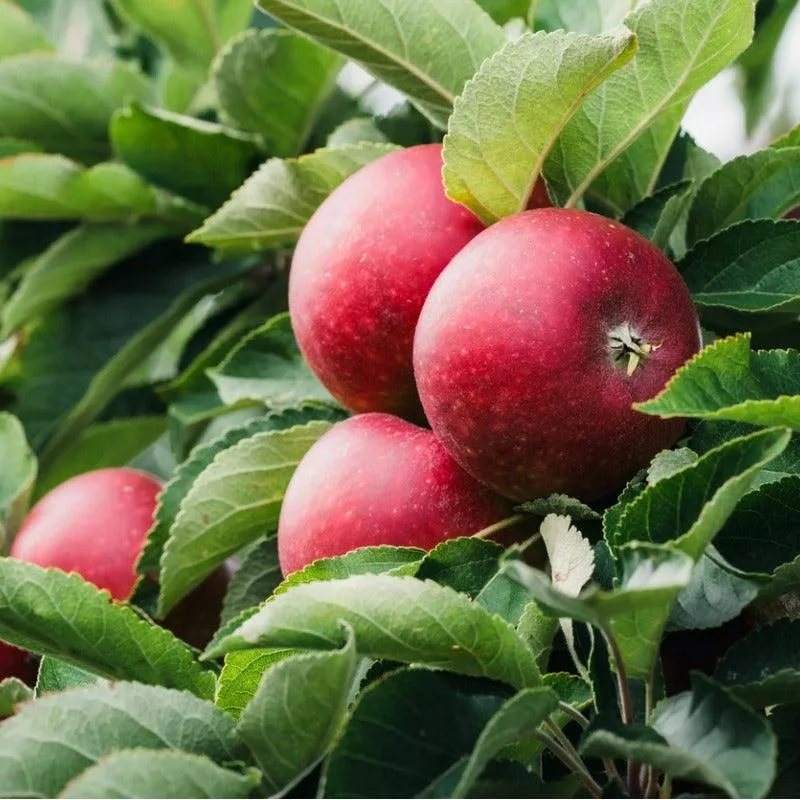
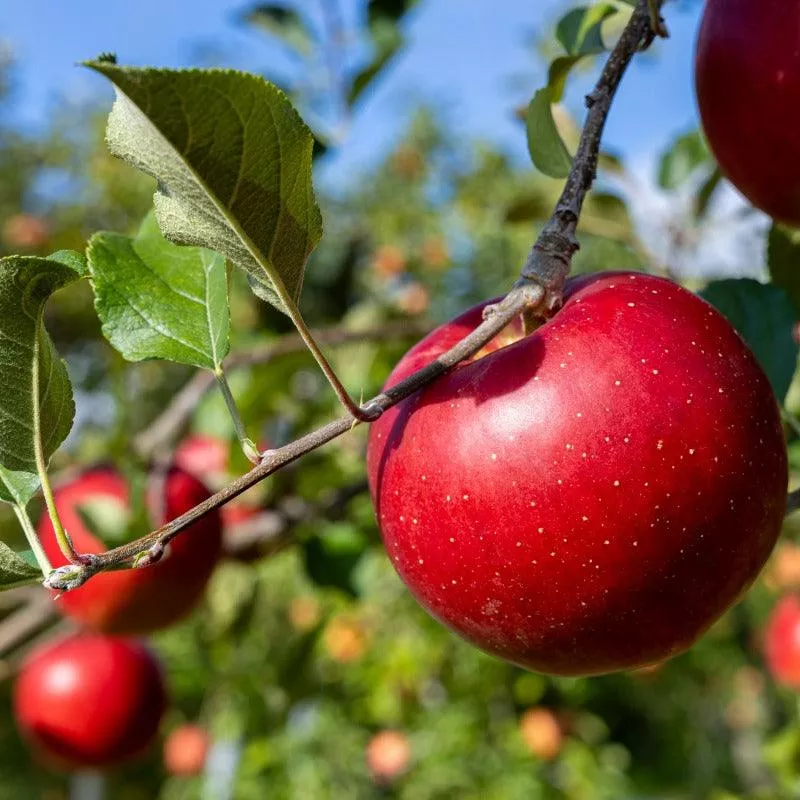
Arkansas Black Spur Apple Tree produces some of the most visually dramatic fruit in the orchard—apples that deepen from dark red to an almost black-purple finish as autumn advances. Beneath that striking skin is dense, crisp flesh with bold sweet-tart flavor and a character that continues to evolve after harvest. Fresh from the tree, the apples can be firm and intense; after time in storage, they mellow, sweeten, and develop richer aromatic depth. This transformation makes Arkansas Black especially rewarding for gardeners who enjoy storing fruit into winter, while its structure and flavor also suit baking, cider, and cooking. The compact spur-bearing habit adds practical appeal. For shoppers seeking an heirloom apple with mystery, longevity, and a harvest unlike familiar supermarket varieties, Arkansas Black offers both dramatic beauty and the pleasure of fruit that improves with patience. Arkansas Black was found in Benton County, Arkansas, in the nineteenth century and is generally considered a seedling of Winesap.
Arkansas Black Spur needs 500–600 chill hours and grows in USDA zones 5–9. This semi-dwarf tree on M-111 rootstock generally ripens in October.
It is partially self-fruitful but benefits substantially from a compatible pollinizer. Golden Delicious or Granny Smith can support stronger fruit set where bloom overlaps.
Arkansas Black Spur Apple Tree Details
Fruit: Medium apple that matures from deep red to nearly black
Flavor and texture: Very dense and crisp with bold sweet-tart flavor that mellows in storage
Best uses: Storage, fresh eating after conditioning, baking, cooking, and cider
Harvest: October
USDA zones: 5–9
Chill hours: 500–600 hours
Tree size: Semi-dwarf on M-111 rootstock
Rootstock: M-111
Pollination: Partially self-fruitful; a compatible apple is recommended for stronger crops.
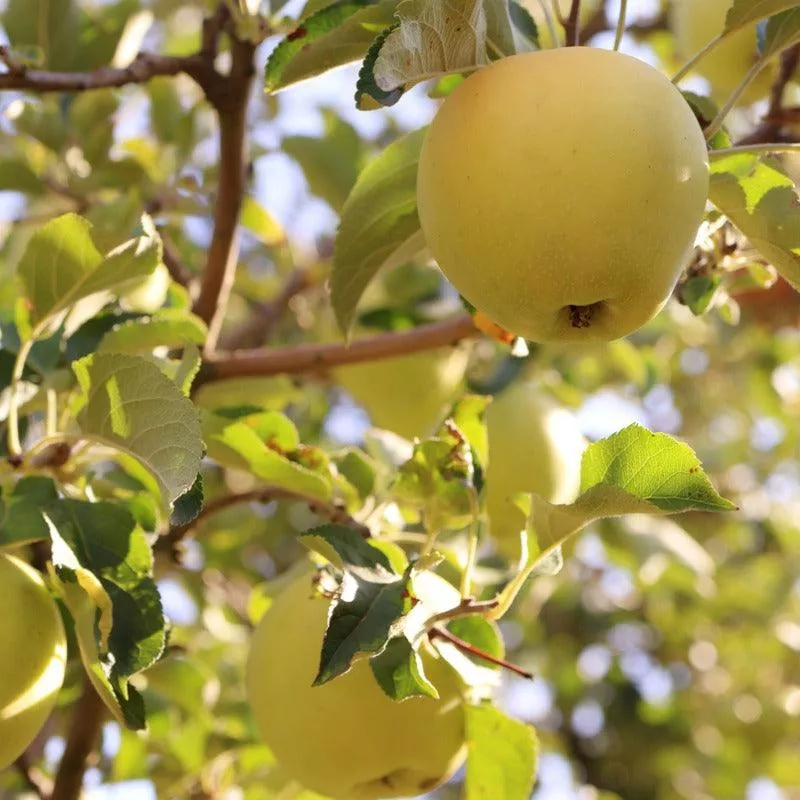
Recommended pollinizers: Plant with Golden Delicious Apple or Granny Smith Apple.
Special care: Store harvested apples for several weeks to allow their texture and flavor to mellow.
Something Special: Arkansas Black was found in Benton County, Arkansas, in the nineteenth century and is generally considered a seedling of Winesap.