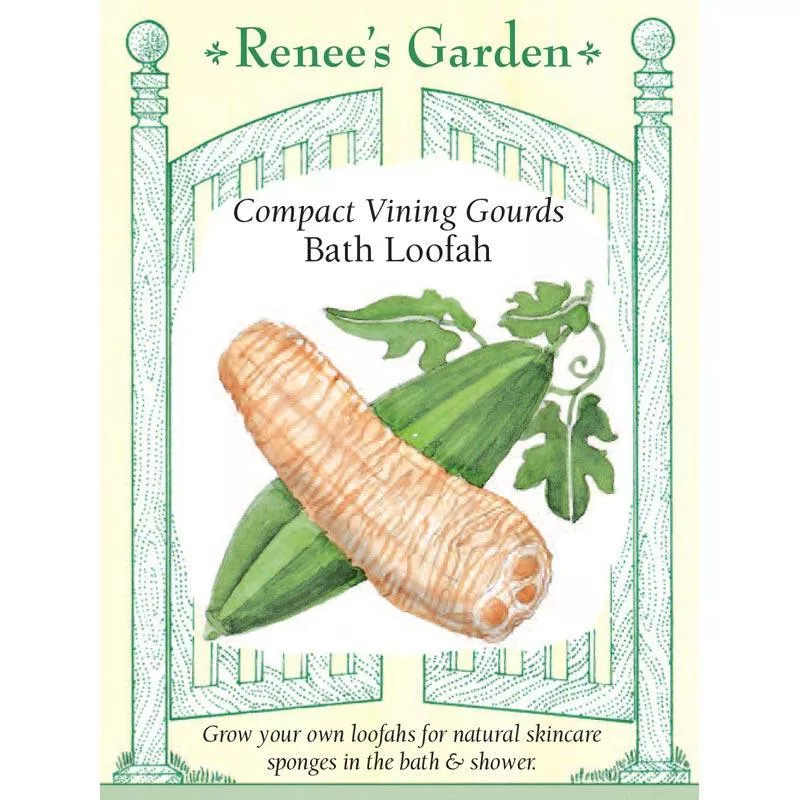
Compact vining gourds produce durable, fibrous sponges that make excellent natural bath loofahs. Easy to grow in warm, sunny conditions, these plants climb readily on trellises or fences, producing elongated fruits that, when fully matured and dried, reveal their signature sponge-like interior. The dried loofahs are perfect for skin exfoliation, helping to gently scrub and improve circulation during bath or shower use. In addition to personal care benefits, loofah sponges are versatile for eco-friendly cleaning. Their firm yet flexible texture makes them effective at scrubbing dishes, countertops, and other surfaces without scratching, while their fully biodegradable nature makes them a sustainable alternative to synthetic sponges.
Variety Details
Plant type: Tender Annual
Growth habit: Vining
Crop category: Squash
Product format: Seed packet
Plant family: Curcubitaceae (Curcubits)
Sowing & Growing
Light: Full Sun
Planting season: Spring
Starting location: Direct Sow or Start Indoors & Transplant
Recorded soil pH: 5.1 – 5.5 or 5.6 – 6.0
Sow Bath Loofah Compact Vining Gourd after the soil has warmed and frost danger has passed, or transplant established seedlings without disturbing their roots more than necessary. Preserve the recorded spacing because broad leaves and vines can occupy more room than young plants suggest. Check soil moisture at root depth and direct water toward the soil. Once fruit develops, inspect plants frequently and harvest at the stage appropriate to summer or winter squash. Use clean cuts to avoid damaging stems.
The plants thrive in well-drained soil enriched with organic matter and benefit from consistent watering and sturdy vertical supports to maximize yields.
Before sowing Bath Loofah Compact Vining Gourd, review the packet alongside the current product details and note any range in temperature, germination, or maturity. Ranges reflect biological and seasonal variation rather than a fixed promise. Label each planting with its date and location, then compare emergence, growth, and harvest with local weather. This record is useful for succession plantings and for deciding whether the crop fits better into an earlier or later seasonal window.