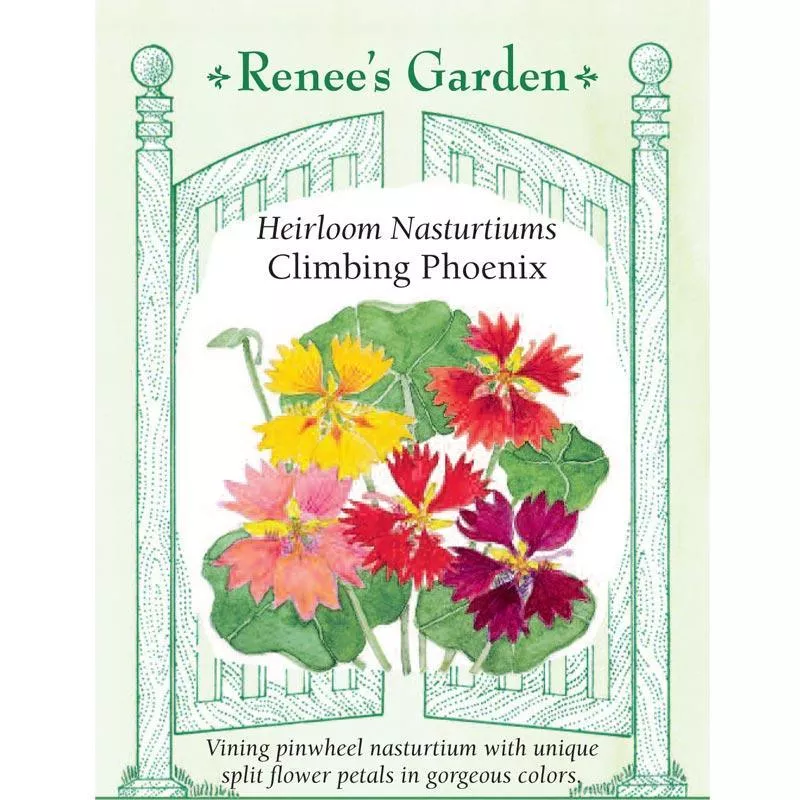
Nasturtium – Climbing Phoenix (Heirloom) – Tropacolum majus Annual – These split-petal vining nasturtiums date from the 19th century. Their unique petals, shaped like little flames, stand out in a kaleidoscope of colors against ivy-shaped leaves. Carefree Phoenix blooms absolutely repeat, covering the foliage with both bright and pastel blossoms in crimson-red, rich gold, fiery orange, warm cream and soft peach, many brushed with burnished copper at the petal base. Phoenix flowers are edible and especially gorgeous scattered on salads or used as edible garnishes for savory dishes.
Variety Details
Botanical name:Tropacolum majus
Plant type: Annual
Growth habit: Vining
Crop category: Flower seed
Flower character: Annual – These split-petal vining nasturtiums date from the 19th century.
Product format: Seed packet
Sowing & Growing
Soil Temperature: above 50°F
Planting Depth: 1″
Germination: 10-12 Days
Height At Maturity: 4-6 feet
Sun/Shade: Full to Partial Sun
Spacing After Thinning: 6-8″
Prepare a weed-reduced seedbed for ‘Climbing Phoenix’ Heirloom Nasturtium and use the recorded planting season, depth, and light requirements. Press shallow-sown seed into good soil contact and keep the seed zone from drying during establishment. Thin or transplant only when the growth habit and spacing call for it. Leave enough room for mature width and air movement. Bloom timing and final height can shift with sowing date, climate, soil, moisture, and competition, so use listed figures as planning ranges.
Soil & Water: Climbing nasturtiums are easy to grow in any well-drained soil.
Place ‘Climbing Phoenix’ Heirloom Nasturtium where its recorded height and growth habit fit the surrounding planting. Shorter companions can be positioned toward bed edges, while taller stems need room where they will not shade small seedlings too early. If cutting flowers, harvest with clean tools at the stage appropriate to the bloom form. If leaving flowers in place, observe how bloom sequence changes through the season and record which sowing date performed best at the site.