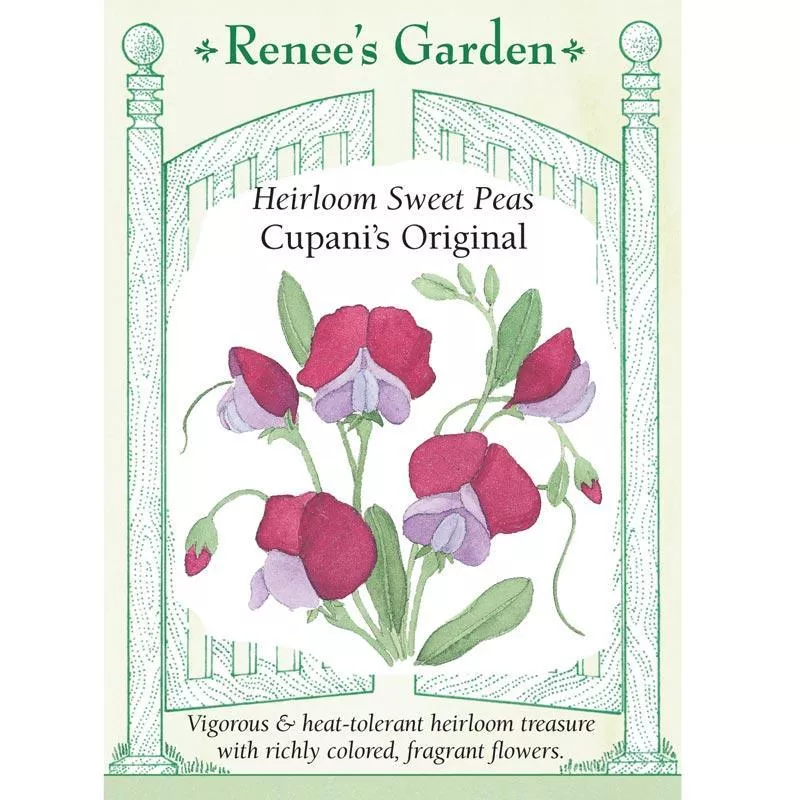
Sweet Pea – Cupani’s Original (Heirloom) – Lathyrus odoratus This is an especially strong blooming strain of this heat-tolerant treasured heirloom. Its ancestry can be traced to the first wild sweet peas from Sicily named for Father Francis Cupani, the Italian monk who discovered and sent them back to England in the 17th century. These intensely perfumed, beautifully bicolored flowers have petals of deep maroon-purple and orchid-violet. The fragrance of these classic simple blossoms truly wafts in the air, delighting every passerby.
Variety Details
Botanical name:Lathyrus odoratus
Plant type: Annual
Growth habit: Vining
Crop category: Pea
Recorded feature: Good Cut Flower
Product format: Seed packet
Sowing & Growing
Soil Temperature: above 50°F
Planting Depth: 1″
Germination: 10-14 Days
Height At Maturity: 6-8 feet
Sun/Shade: Full Sun
Spacing After Thinning: 4-5″
Direct sow ‘Cupani’s Original’ Heirloom Sweet Pea into a prepared bed during the appropriate cool-season window. Keep the seed zone moist during establishment without leaving it waterlogged, and provide support when the recorded growth habit calls for climbing space. Once plants begin flowering, inspect developing pods regularly and harvest at the size and texture preferred for the kitchen. Local temperature, soil conditions, and harvest stage can affect the time from sowing to usable pods.
Seedlings will form strong root systems, then overwinter to bloom vigorously in the spring.
Plant seeds 1″ deep and 2 – 3″ apart.
When seedlings are 2″ tall, thin to 4-5″ apart to allow plants room to mature.
Before sowing ‘Cupani’s Original’ Heirloom Sweet Pea, review the packet alongside the current product details and note any range in temperature, germination, or maturity. Ranges reflect biological and seasonal variation rather than a fixed promise. Label each planting with its date and location, then compare emergence, growth, and harvest with local weather. This record is useful for succession plantings and for deciding whether the crop fits better into an earlier or later seasonal window.