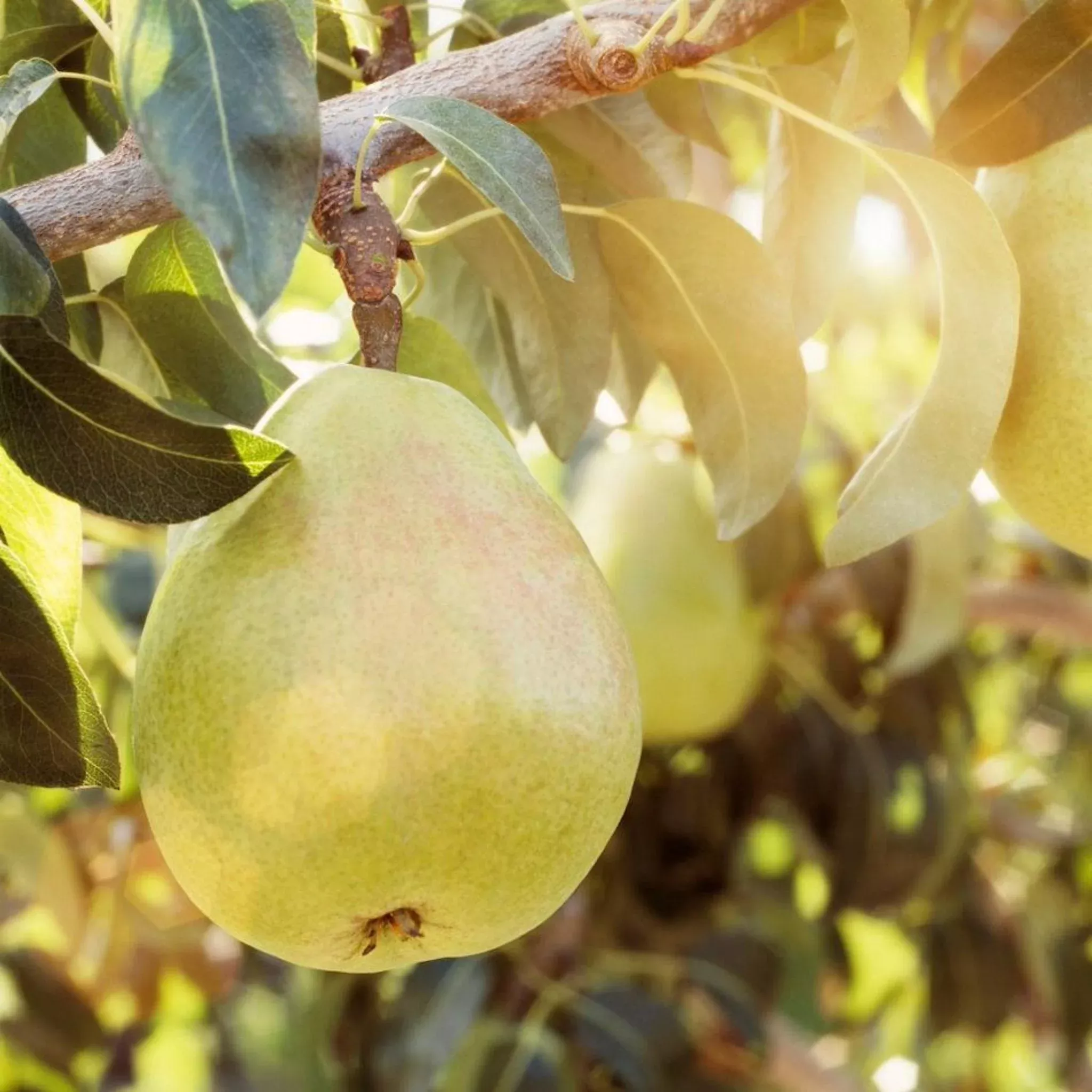
D’Anjou Pear Tree is an excellent all-purpose European pear for gardeners who want juicy fruit that performs equally well on the table and in the kitchen. The large, short-necked pears mature green to yellow or softly russeted, sometimes developing a blush, while firm white flesh ripens to a smooth, melting texture with a lightly citrus character. D’Anjou is refreshing fresh, attractive on fruit plates, and sturdy enough for baking, poaching, preserves, and savory dishes. The fruit is picked mature but firm and ripened off the tree, giving the grower flexibility to bring pears indoors in stages. White spring blossoms add beauty and pollinator value before the vigorous tree begins its crop. With versatile flavor, useful storage potential, and compatibility with several familiar European pears, D’Anjou is a dependable foundation for a productive home pear orchard.
D’Anjou grows semi-dwarf on OHxF333 rootstock and is suited to USDA zones 5–9, with a confirmed 800-hour chill requirement., harvest generally occurs in mid to late September. Plant in full sun and well-drained soil, prune for good light and airflow, and pick fruit firm for controlled indoor ripening.
D’Anjou requires another compatible pear for pollination. The confirmed choice is Bartlett; Comice offers another compatible orchard companion.
D’Anjou Pear Tree Details
Fruit: Large, short-necked pears with green-to-yellow or lightly russeted skin
Flavor and texture: Juicy, smooth, melting, and gently citrus-like
Best uses: Fresh eating, baking, poaching, preserving, and savory dishes
Harvest: Mid to late September
USDA zones: 5–9
Chill hours: 800
Tree size: Semi-dwarf on OHxF333 rootstock
Rootstock: OHxF333
Pollination: Requires another compatible pear
Recommended pollinizers: Bartlett or Comice
Special care: Harvest mature fruit firm and finish ripening indoors
Something special: D’Anjou is thought to have originated in Europe in the early nineteenth century and remains a classic keeper.