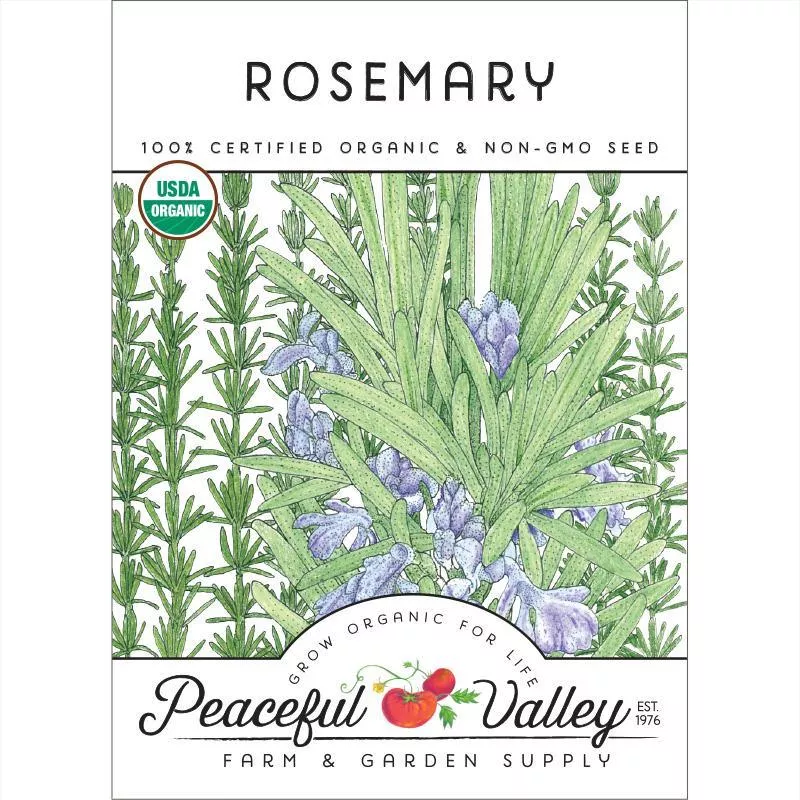
Rosemary is a perennial herb loved for its fragrant, needle-like leaves and robust, savory flavor. This Mediterranean native thrives in full sun and well-draining soil, making it an ideal choice for herb gardens, borders, or containers. Rosemary’s intense aroma and earthy flavor make it a versatile ingredient for roasting meats, seasoning vegetables, or baking breads. It is also prized for its ornamental beauty, with its evergreen foliage providing year-round interest in the garden. Regular pruning encourages fresh growth and maintains its shape, ensuring a steady supply of flavorful leaves for your kitchen.
Variety Details
Botanical name:Rosmarinus officinalis
Plant type: Perennial
Growth habit: Upright
Crop category: Herb
Kitchen profile: Rosemary is a perennial herb loved for its fragrant, needle-like leaves and robust, savory flavor.
Recorded feature: Container Compatible
Product format: Seed packet
Sowing & Growing
Soil Temperature: 60-70°F
Planting Depth: 1/8″
Germination: 21-28 Days
Height At Maturity: 12″-48″
Days to Maturity: 80-100
Sun/Shade: Full Sun
Spacing After Thinning: 24-36″
Match Rosemary to the light, soil, and temperature information recorded for the species. Some herbs are direct sown, while others benefit from a protected start or species-specific pretreatment, so retain the packet for reference. Keep seed media from drying during establishment without leaving it saturated. Once plants are growing, harvest modestly so foliage remains for continued development. Assign perennial herbs a long-term location, and consider containers for species with a spreading habit.
Regular pruning encourages fresh growth and maintains its shape, ensuring a steady supply of flavorful leaves for your kitchen.
Before sowing Rosemary, review the packet alongside the current product details and note any range in temperature, germination, or maturity. Ranges reflect biological and seasonal variation rather than a fixed promise. Label each planting with its date and location, then compare emergence, growth, and harvest with local weather. This record is useful for succession plantings and for deciding whether the crop fits better into an earlier or later seasonal window.
Use a dated label for Rosemary and compare actual emergence, growth, and harvest or bloom timing with the ranges in the current record. Local soil, temperature, light, moisture, and planting date can shift results. Keep observations with the remaining packet so the next sowing can be adjusted without replacing product-specific measurements with a universal calendar.