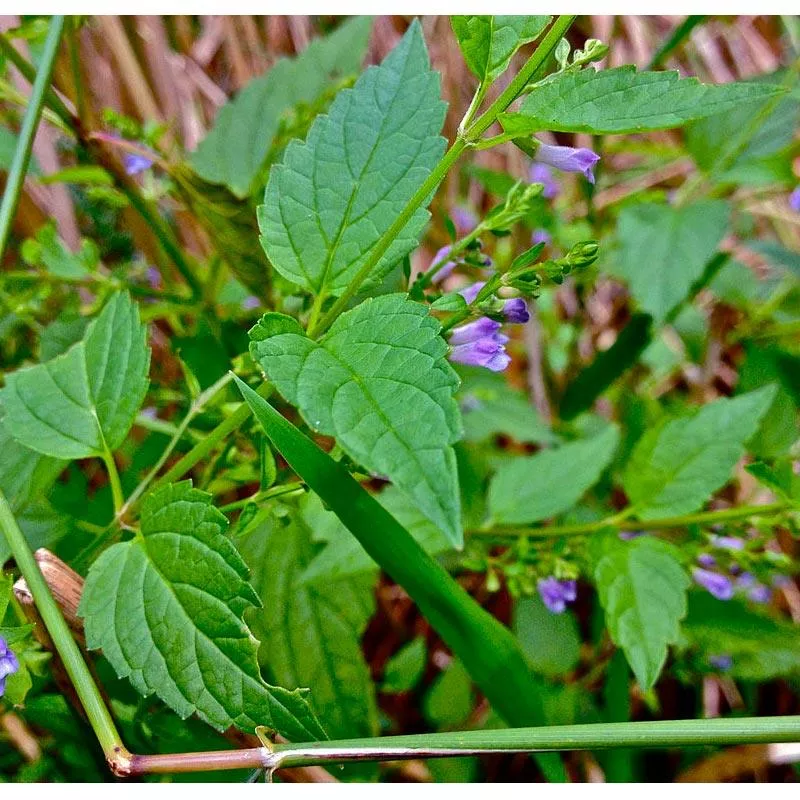
Skullcap – Scutellaria lateriflora Short-lived creeping herbaceous perennial hardy to -15 degrees F. Flowers blue to 2 feet tall. Organically grown. 100 seeds/pkt. Growing skullcap, including varieties like American Skullcap (Scutellaria lateriflora) and Chinese Skullcap (Scutellaria baicalensis), offers a unique insight into the world of herbal cultivation. These herbs, with their rich history in traditional practices and interest in scientific research, are intriguing for both gardeners and herbal enthusiasts. Introduction to Skullcap American Skullcap (Scutellaria lateriflora)**: This herb is native to North America, thriving in moist, rich soils and partially shaded areas.
Variety Details
Botanical name:Scutellaria lateriflora
Plant type: Tender Perennial
Growth habit: Herbaceous
Crop category: Vegetable
Recorded feature: Open-Pollinated
Product format: Seed packet
Sowing & Growing
Light: Partial Sun
Planting season: Spring
Starting location: Direct Sow
Recorded soil pH: 6.1 – 6.5
Use the product-specific sowing figures for Skullcap as the starting point, then adjust timing to local soil temperature and frost conditions. Prepare the bed before planting, preserve the recorded spacing, and evaluate moisture at root depth instead of following a universal calendar. Watch development as the stated maturity window approaches and harvest at the size, texture, or color preferred for the crop. Label the row with the sowing date so actual performance can inform future plantings.
Conversely, the Chinese Skullcap is more adaptable to sunnier and drier conditions, though it also requires well-drained soil for optimal growth.
Studies have focused on the phytochemical profiles of these plants, exploring their various natural compounds.
Before sowing Skullcap, review the packet alongside the current product details and note any range in temperature, germination, or maturity. Ranges reflect biological and seasonal variation rather than a fixed promise. Label each planting with its date and location, then compare emergence, growth, and harvest with local weather. This record is useful for succession plantings and for deciding whether the crop fits better into an earlier or later seasonal window.
Explore related options in our Herb Seeds.
These statements have not been evaluated by the Food and Drug Administration. This product is not intended todiagnose, treat, cure, or prevent any disease.