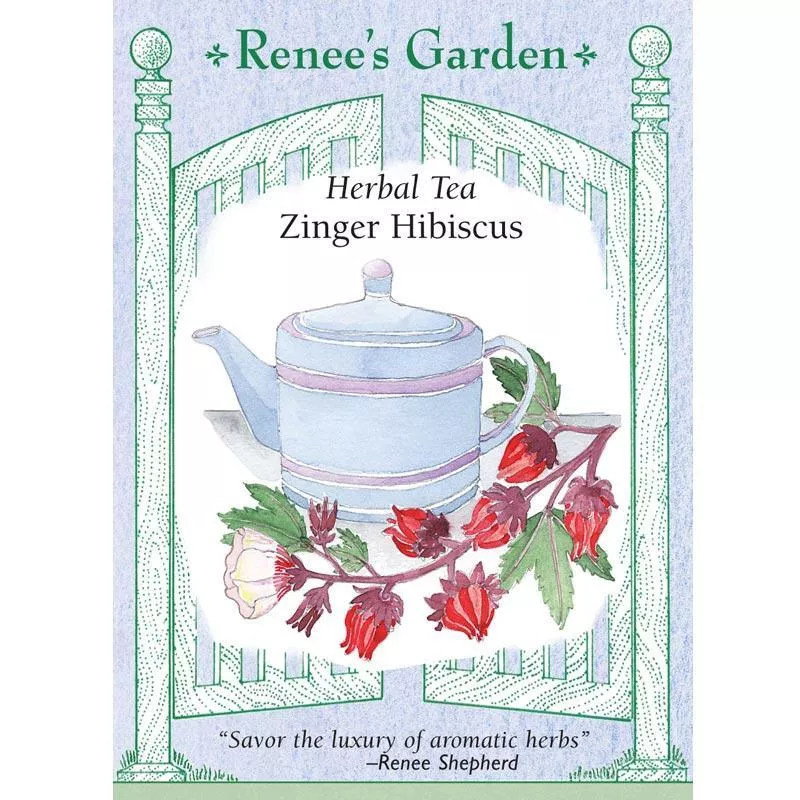
Zinger Herbal Tea Hibiscus is a vibrant and functional addition to any home garden or small farm, offering both ornamental beauty and a valuable herbal harvest. With its upright habit, lush foliage, and pale yellow blooms with deep red centers, Zinger Hibiscus makes a bold statement in the garden while supporting pollinator activity. This warm-season crop thrives in full sun and well-drained, fertile soils, especially in regions with long, hot summers. Plants reach 4–6 feet tall and require ample space for branching.
Variety Details
Botanical name:Hibiscus sabdariffa
Plant type: Tender Perennial
Growth habit: Bush
Crop category: Herb
Kitchen profile: Whether you’re cultivating a herbs patch, expanding your edible landscape, or creating a garden rich in biodiversity, Zinger Hibiscus offers beauty, flavor, and versatility.
Recorded feature: Does Not Require Support
Product format: Seed packet
Sowing & Growing
Germination temperature: Soil Temperature: 65–70°F Planting Depth: 1/2″ Germination: 7–10 Days Height At Maturity: 2–3 Feet Days To Maturity:…
Maturity: Soil Temperature: 65–70°F Planting Depth: 1/2″ Germination: 7–10 Days Height At Maturity: 2–3 Feet Days To Maturity:…
Light: Full Sun
Planting season: Spring
Starting location: Start Indoors & Transplant
Match Zinger Herbal Tea Hibiscus to the light, soil, and temperature information recorded for the species. Some herbs are direct sown, while others benefit from a protected start or species-specific pretreatment, so retain the packet for reference. Keep seed media from drying during establishment without leaving it saturated. Once plants are growing, harvest modestly so foliage remains for continued development. Assign perennial herbs a long-term location, and consider containers for species with a spreading habit.
Before sowing Zinger Herbal Tea Hibiscus, review the packet alongside the current product details and note any range in temperature, germination, or maturity. Ranges reflect biological and seasonal variation rather than a fixed promise. Label each planting with its date and location, then compare emergence, growth, and harvest with local weather. This record is useful for succession plantings and for deciding whether the crop fits better into an earlier or later seasonal window.
Explore related options in our full collection of herb seeds.