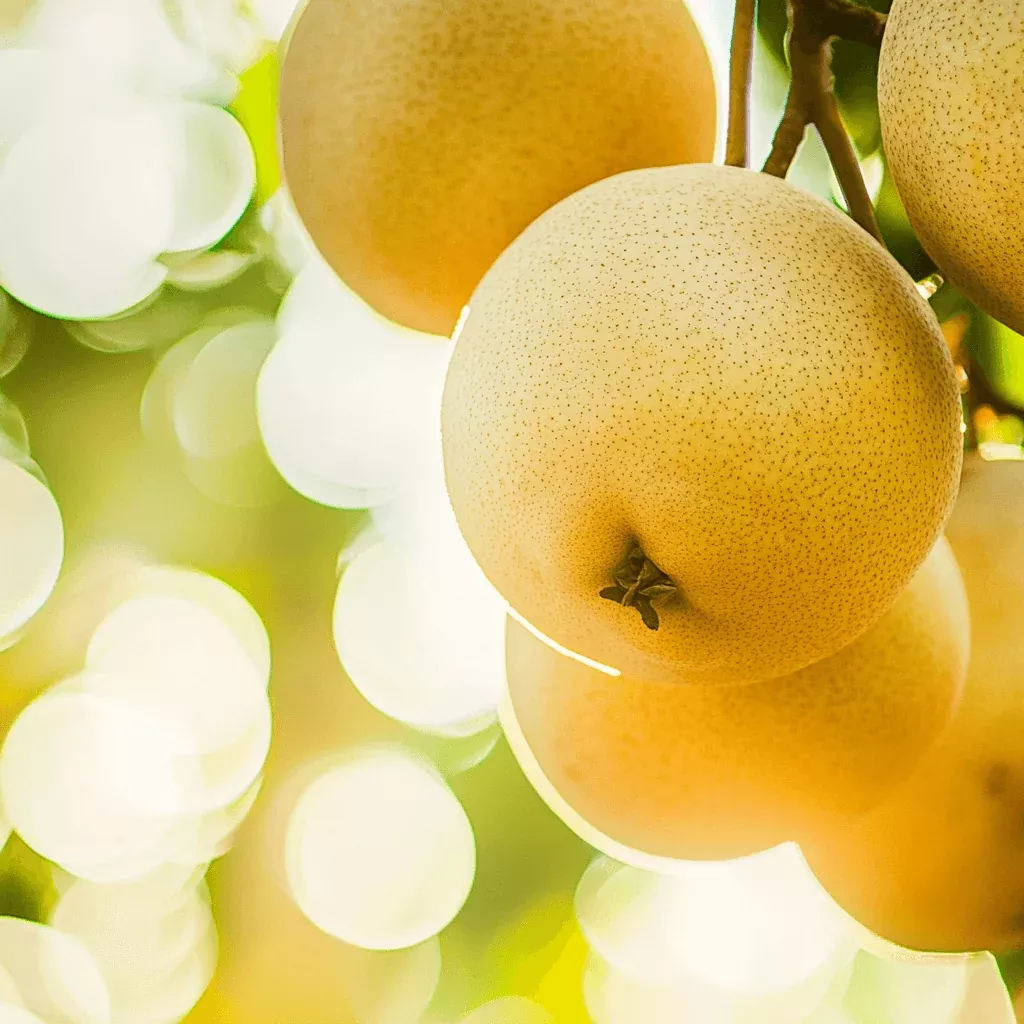
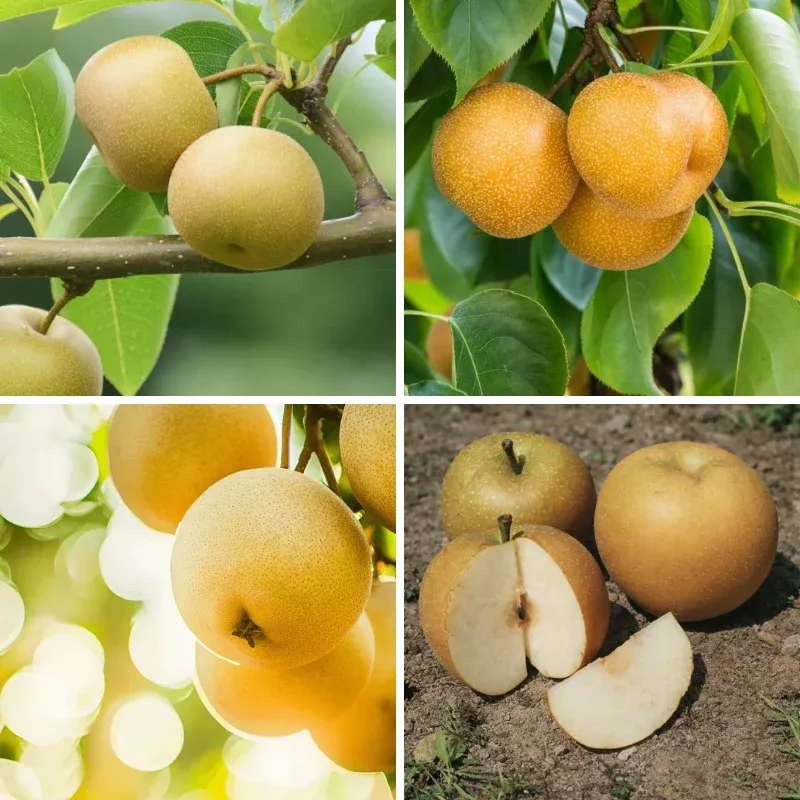
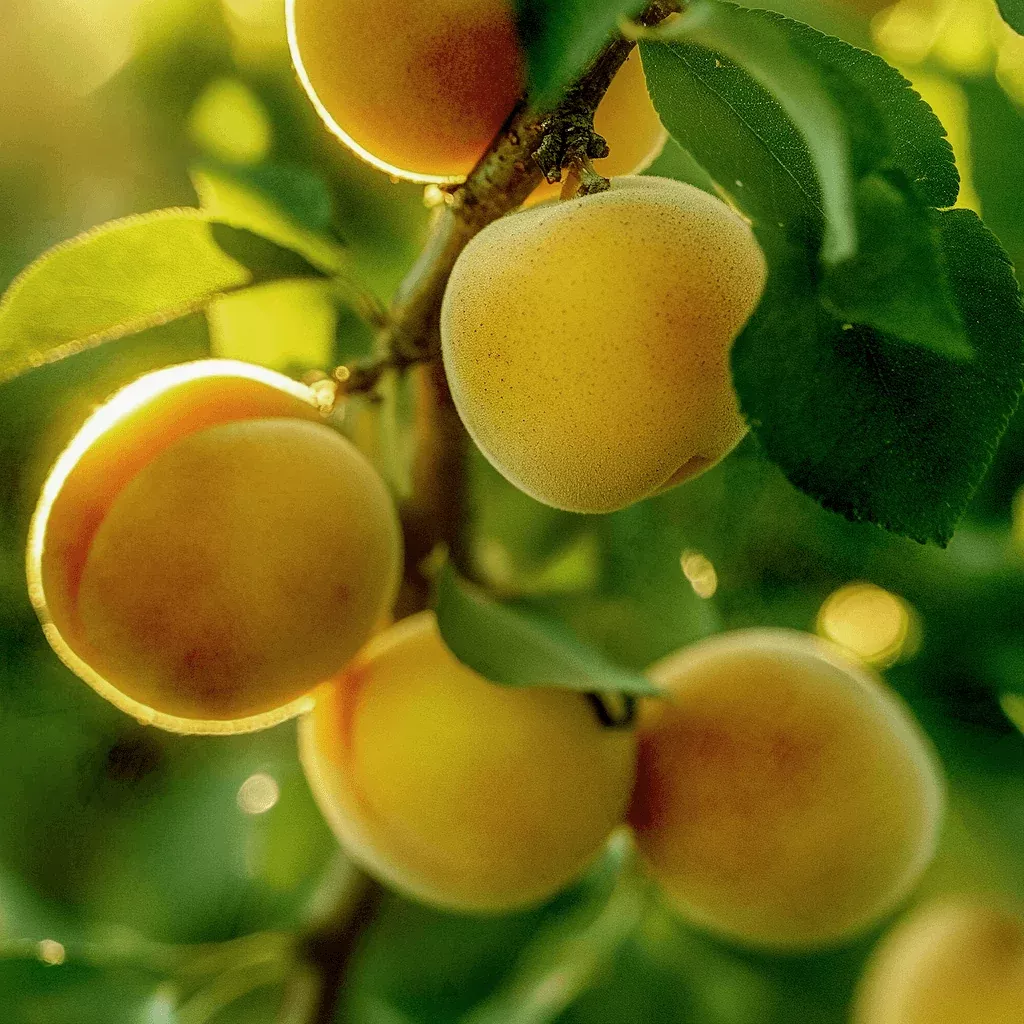
20th Century Asian Pear Tree brings an irresistible kind of crunch to the home orchard. Also known as Nijisseiki, this beloved Japanese variety produces round, golden fruit with thin skin and exceptionally juicy flesh. The flavor is clean, mild, and delicately sweet, making each pear refreshing straight from the tree and easy to enjoy in salads, lunchboxes, desserts, or elegant cheese plates. Unlike European pears, Asian pears are typically allowed to ripen on the tree and remain crisp when ready to eat. The tree adds clouds of white blossoms to the spring garden before developing a generous crop that can keep well after harvest. For gardeners who want fruit with the snap of an apple and the perfume and juiciness of a pear, 20th Century is a dependable, approachable favorite with more than a century of orchard history. Kakunosuke Matsumoto found the original tree in Japan; the pear was renamed Nijisseiki, or “twentieth century,” in 1904.
This tree grows semi-dwarf on OHxF333 rootstock and is suited to USDA zones 5–10, with a confirmed 300–400 chill-hour requirement., harvest is typically during August. Plant in full sun and well-drained soil, provide consistent moisture during fruit development, and thin crowded clusters to improve fruit size and reduce stress on branches.
20th Century is self-fruitful and can bear alone, but another compatible pear can improve pollinator activity and fruit set. Confirmed choices include Bartlett and other Asian pears such as Chojuro or Hosui.
20th Century Asian Pear Tree Details
Fruit: Round, medium-size golden Asian pears with thin skin
Flavor and texture: Exceptionally juicy, crisp, mild, and delicately sweet
Best uses: Fresh eating, salads, desserts, and cheese plates
Harvest: August
USDA zones: 5–10
Chill hours: 300–400
Tree size: Semi-dwarf on OHxF333 rootstock
Rootstock: OHxF333
Pollination: Self-fruitful; another compatible pear may improve set
Recommended companions: Bartlett, Chojuro, or Hosui
Special care: Thin clusters and handle ripe fruit gently to prevent bruising
Something Special: Kakunosuke Matsumoto found the original tree in Japan; the pear was renamed Nijisseiki, or “twentieth century,” in 1904.