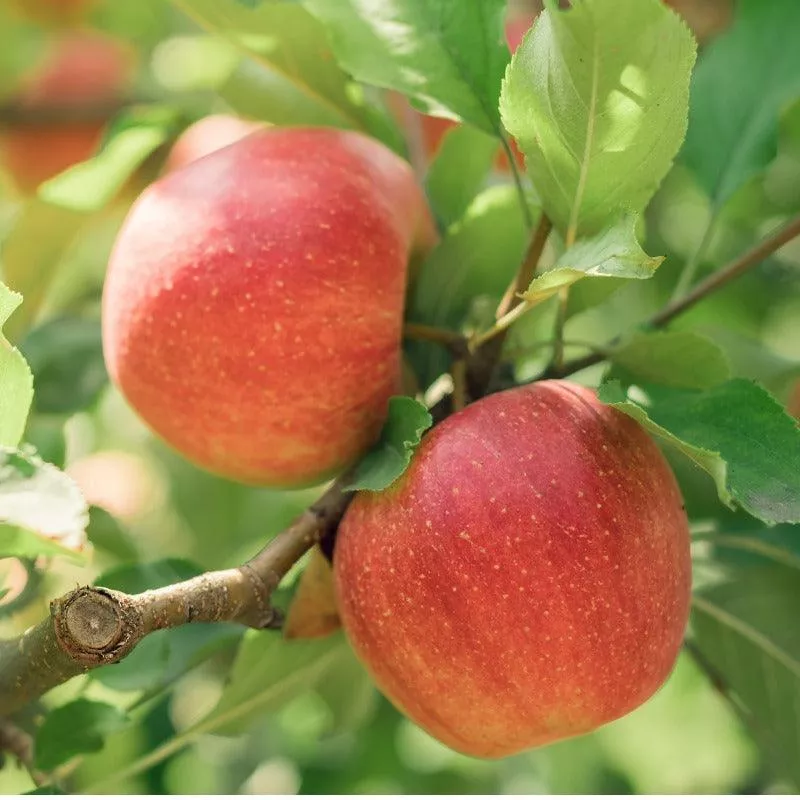
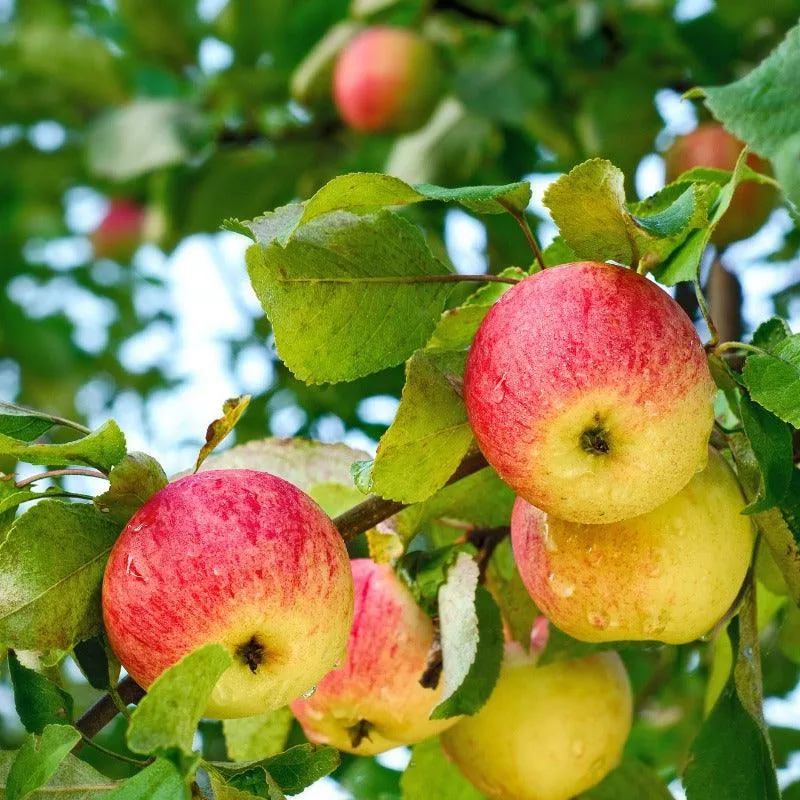
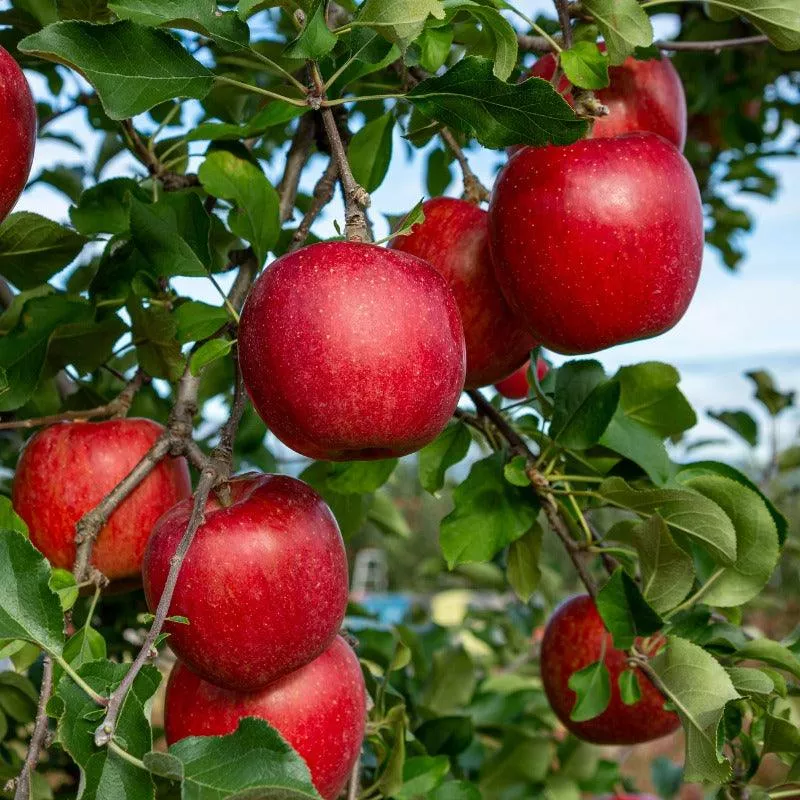
Dwarf Honeycrisp Apple Tree puts one of the most celebrated fresh-eating apples within easier reach of a home gardener. Medium fruit develops striped red color over yellow skin, enclosing pale flesh with the variety’s famous explosive crunch. Each bite seems to burst with juice, balancing pronounced sweetness with gentle acidity and a clean, aromatic finish. Honeycrisp is outstanding fresh, on cheese boards, and in salads, but its structure also works in baking, cider, and refrigerated storage. The dwarf tree is especially appealing where space is limited or where pruning, thinning, and harvest need to remain manageable. Attractive spring blossoms add another season of interest. For apple lovers who prize texture as much as flavor, this compact tree offers the uncommon satisfaction of picking Honeycrisp at ideal ripeness rather than relying on fruit selected for commercial shipping. Before receiving the Honeycrisp name, this University of Minnesota selection was evaluated for years under the breeding number MN 1711.
Dwarf Honeycrisp needs 800–1,000 chill hours and grows in USDA zones 3–9. On Geneva 969 rootstock, it generally ripens from early to mid-August.
Honeycrisp requires a compatible pollinizer. Empire, Gala, Granny Smith, McIntosh, or Red Delicious can provide pollen where bloom overlaps.
Dwarf Honey Crisp Apple Tree Details
Fruit: Medium striped-red apple over yellow skin with pale flesh
Flavor and texture: Explosively crisp, very juicy, aromatic, sweet, and gently tart
Best uses: Fresh eating, salads, cheese boards, baking, cider, and storage
Harvest: Early to mid-August
USDA zones: 3–9
Chill hours: 800–1,000 hours
Tree size: Dwarf on Geneva 969 rootstock
Rootstock: Geneva 969
Pollination: Requires another compatible apple with overlapping bloom.
Recommended pollinizers: Plant with Dwarf Gala Apple or Dwarf Granny Smith Apple.
Special care: Thin heavily to improve annual cropping, fruit quality, and branch strength.
Something Special: Before receiving the Honeycrisp name, this University of Minnesota selection was evaluated for years under the breeding number MN 1711.